
Beyond Fondue: A Taste of Switzerland
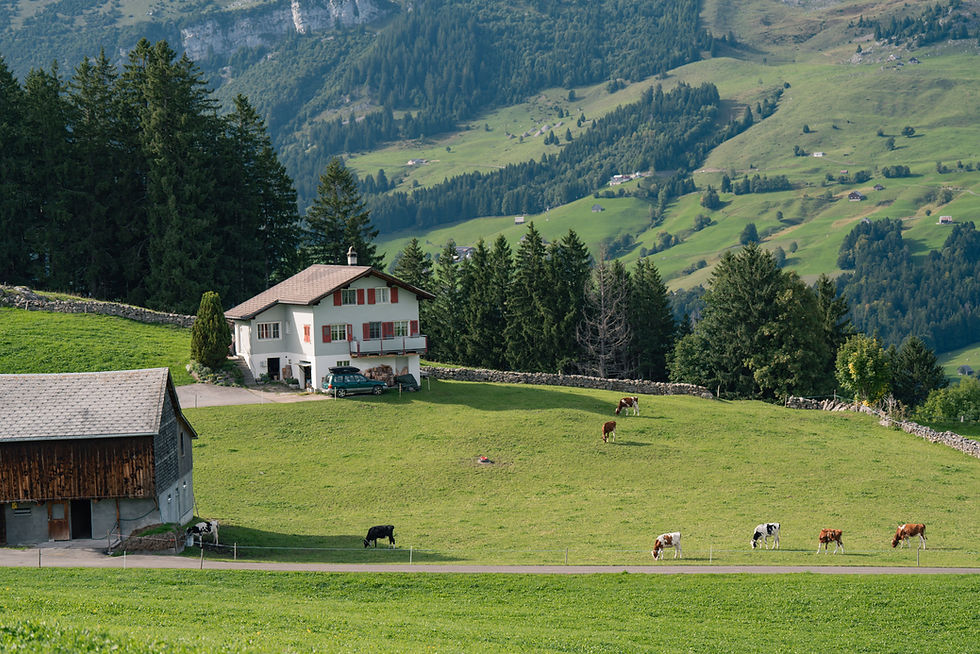
The story of Swiss cheese begins long before it reaches the table. But there is much more to discover behind Switzerland’s famous cheese culture. In many parts of the country, cheese is still closely connected to the mountains, the seasons and the traditions that have shaped everyday life for generations.
During the summer months, cows are brought up to the alpine pastures, where they spend the season surrounded by mountain landscapes and natural grass. In some regions, their diet of alpine grasses and herbs becomes part of the character of the milk, while hay plays an important role during the colder months.
When autumn approaches, they make their way back down to the valleys. Known as the Alpabzug or Alpabfahrt, this traditional descent is celebrated in many parts of Switzerland. The cows are often decorated with flowers and bells as they make their way through the villages, making the return from the mountains part of the celebration itself.

The connection between the mountains and Swiss cheese does not end there.
In some alpine dairies, milk is processed close to where the animals spend their summers. Fresh milk from cows and goats can be transformed into cheese, butter, yoghurt and other local specialities, often just a short distance from where the animals graze. Some of these dairies also open their doors to visitors, offering a closer look at how these products are made. Rather than seeing only the finished product, you begin to discover the process behind it, from the milk and the animals to the people and traditions that shape what eventually reaches the table.
And there is no single Swiss cheese. From Gruyère and Emmentaler to Appenzeller, Sbrinz and the many regional varieties that are less familiar outside the country, each part of Switzerland has developed its own relationship with cheese. Some are made with raw milk, while others follow different production methods and traditions.
There is also something special about the way cheese is enjoyed here. Fondue and raclette are not simply dishes. They are meals meant to be shared, often slowly, around a table with family or friends. Raclette in particular is traditionally associated with taking your time and enjoying the moment rather than rushing through a meal.
Perhaps that is what makes Swiss food so memorable. The experience does not really begin when the fondue arrives at the table. It begins much earlier, somewhere in the mountains, with the land, the animals and the traditions that eventually make their way into what we taste.
Sometimes, to truly taste a place, you have to discover where it begins.
Comments